Don't tell birds, but mushrooms are our favorite thing to learn about, and always have been. We love walking in forests with artists and mycologists and we love visiting labs to hear about the latest mushroom research. We have had the pleasure of studying mushrooms with the following artists. Click on images to see more about each artist. |
|||
|
|||
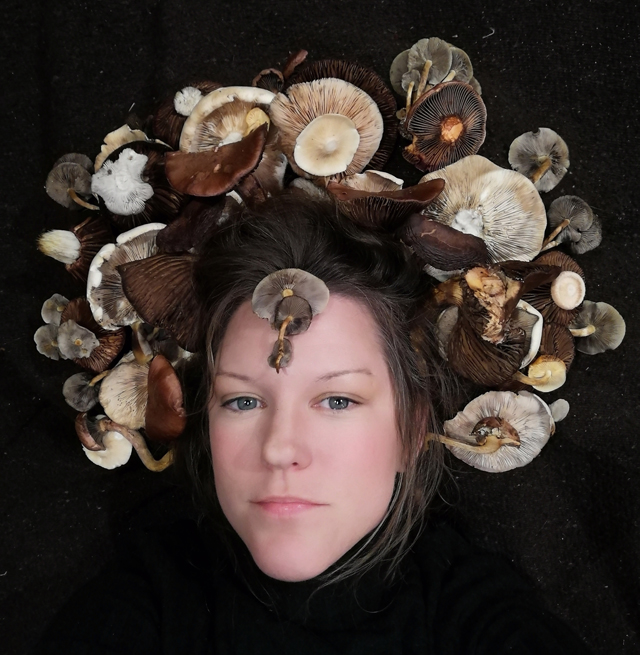
I'm a Canadian research artist interested in paradigm shifts in culture related to ecology. I have a love for biology and natural philosophy and I raise giant silk moths. I'm a long time amateur mycologist and travel the world in search of wild mushrooms, witches’ markets, muppety birds, wild things to ferment and gates to open along wildlife corridors. My work, which often highlights the kinship of Art, Science and magic is really just an invitation for you to indulge in your geekiest interests. |
|||
As a printmaker, most of the pieces I make derive from some kind of book structure. The structure of a book is simple and its function is intuitive. While books are generally static objects, they are built to be in motion. The spine of a book demonstrates just the right amount of flexibility to allow access. The book form is a vehicle for information, information that was important enough to mechanize and disseminate. Printmaking for me has always been about a mechanism. |
|||
Stemming from a desire to explore the self as an organism of flux, my work explores the lives of speculative creatures able to transform themselves to adapt to their environment. Inspired by microorganisms, plant life, and the interior structures of organic life, I use monsters and creatures as portals to access parts of ourselves which are intrinsically linked to nature: a site where curiosity, wonder, anguish, and survival instincts collide. As a queer, neurodivergent second-generation immigrant, many aspects of my identity fall into the in-between. I’ve always been drawn to the monster in all forms of media: the othered hybrid, the outcast creature unable to be anything but its unapologetic self, undeniably powerful and free, existing outside of social conventions. I found freedom and healing through the ways monsters have always tended to embrace dread and desire head-on, through radical self-making and resilience. I see these beings as vessels for Othered bodies, allowing access to catharsis by embracing transformation: an ever-evolving, fluid and full self. My current work is focused on the evolutionary jump between the inert and the living: how the organization of matter forming organic life came to be. I’m seeking to blend the latest scientific findings on these topics with a playful speculative approach through animation and drawing. |
|||
My work investigates the tension between systems of containment and the autonomy of natural forms. Through sculpture, photography, and print-based processes, I examine how human-made structures impose order, restraint, and permanence, while natural bodies persist through movement, adaptation, and quiet refusal. Photography is often my starting point. Through close observation of plants, insects, wildlife, and landscapes, I am drawn to structures and relationships that are easily overlooked — roots, cellular forms, nests, fragile networks, and cycles of growth and decay. In the studio, these observations are translated into physical form, where organic and found materials meet rigid supports, fasteners, frames, and barriers. Natural forms resist full containment: they bend, emerge, fracture, reroute, and continue. Mycophilia offers an opportunity to extend this inquiry into the largely unseen world of fungi. I am particularly interested in mycelial networks, symbiosis, decomposition, and regeneration, and in how these systems might reshape my understanding of connection, resilience, and transformation. I want to explore how natural materials can be grown and cultivated as part of the art-making process, particularly as surfaces for photographic and print-based imagery. I am interested in experimenting with translucent and organic substrates onto which photographs, etchings, or other printmaking processes might be transferred, allowing the biological material and the image to become physically intertwined. |
|||
I am a Bolivian-Canadian visual artist whose practice integrates nature exploration, botanical research, and the creation of deep connections between people and the natural world.
|
|||
I am interested in what we consider holy and how we signal that it is. Starting in 2023 with the exhibition Membranes, I have worked intensely with the biological and mathematical building blocks of life, my theory being that these are what we will consider holy in future religious practices, when the patriarchal, Abrahamitic religions have been supplanted.
|
|||
I am a settler in Canada of Ukrainian, Baltic, Mennonite and Irish heritage. My work revolves around climate crisis endurance exercises that respond to climate uncertainty, land-use changes, and biodiversity loss with sensual research, ecological materials, reciprocal pigment foraging, other-than-human invitations, climate narratives, and socially-engaged ecoart practices. Living within the territory of the Atikameksheng Anishnawbek in N'Swakamok (Sudbury, Ontario), I recognize that colonialism and mining interests led to the creation of the Robinson Huron Treaty of 1850. Mining impacts directly effect the context in which I work, including the tensions among fallout of historical nickel smelter pollution, heavy metal levels, mass tailings ponds, as well as an immense community-engaged regreening project remediating the land through the re-alkalizing and planting of 10 million trees, described in my personal and collective work as part of ee portal. My current projects are soil colour carbon sink, bog-moss-lettuce, and sounds are pigments are places, funded by the Canada Council for the Arts and Ontario Arts Council. |
|||
My practice is rooted in illustrative documentation, material exploration, and curiosity-driven ways of learning from land, plants, and people. As an illustrator and eco-arts practitioner, I explore the intersections of storytelling, place-based research, and experimental craft through drawing, printmaking, and natural materials. |
|||
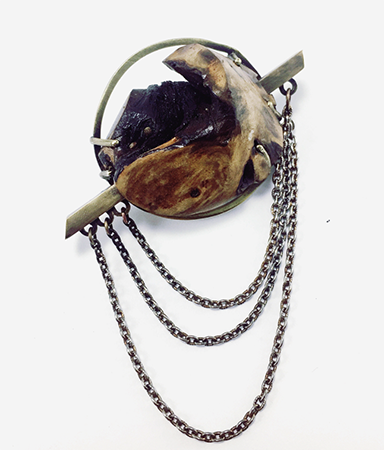
Gideon Hermann is a jeweler and metalsmith currently located in northwestern Pennsylvania. They are pursuing a Master of Fine Arts degree at Pennsylvania Western University, Edinboro. They received their Bachelor of Fine Arts with a focus in Jewelry and Metalsmithing and a Digital Fabrication and Design Certificate at the University of Wisconsin-Milwaukee in May 2021. Their work examines post-industrial landscapes, particularly those of the Rust Belt, and the evolving relationship between industry, ecology, and time. They are drawn to places where natural processes reclaim abandoned structures: rust and rot creep in, plants emerge through concrete, and buildings slowly collapse back into the environments they once dominated. Rust is central to this work, acting as both a material and metaphor for decay, memory, and nature’s persistent reclamation. Gideon works with mild steel, using rust as a collaborator rather than fighting against it. In their series of “Temporary” brooches, they expose steel to the elements and periodically paint them, mirroring the futile attempt to halt rust on urban infrastructure using paint. The steel continues to corrode beneath each layer, causing the paint to crack and flake. Over time, these layers form an archive of the struggle between preservation and inevitable decay. In this series, Gideon periodically documents the work to create a photographic archive of each brooch’s decay over time. Ecology is another conceptual anchor for their work. To them, post-industrial sites hold both harm and hope. These sites bear the scars of extraction, yet plants emerge that remediate soil, water, and atmosphere. Gideon explores plants as agents of healing and interdependence, enabling us to imagine futures where human and non-human beings thrive together. Jewelry, as a format, allows these ideas to unfold at the scale of the body. Its intimacy encourages the viewer to look closely. By miniaturizing industrial forms and elevating overlooked organisms, they create opportunities for slow observation and renewed connection. This work sits at the intersection of geometry and chance, industry and ecology, decay and regeneration. Through metalsmithing, they aim to cultivate empathy, attention, and a deeper understanding of the living systems that persist within and beyond post-industrial landscapes. |
|||
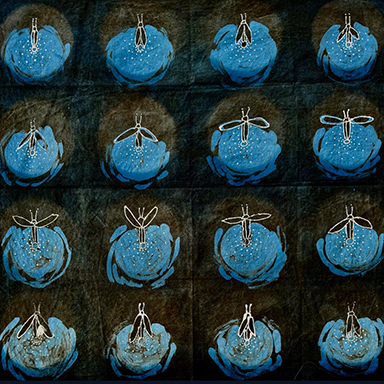
Kim Noce Kim is an artist, filmmaker, animator and educator whose practice explores animation as an ecological, material and participatory process. Her ongoing research, Animated Environmental Rituals, investigates relationships between animation, ecology, ritual and place through fieldwork and artistic research in Mongolia, Indonesia, UK, Portugal and China. In Mongolia, she developed Animated Environmental Rituals: Light of the Heart’s Home during a residency at the Erdenesiin Khuree Mongolian Calligraphy & Art Center. The project brought together movement, Mongolian calligraphy, ecological materials and immersive installation. Her recent research in Indonesia explores batik animation through natural dyes , inspired by the work of “bring back the light” a conservation project exploring the life cycle, movement and synchronisation of fireflies. Across Mongolia, Indonesia and China, her work considers how local ecological knowledge, traditional practices and relationships with landscape can inform new approaches to animation. Kim is particularly interested in how animation can move beyond representing nature and become a process of attention, exchange and ecological interdependence. Through the Mycophilia programme, she hopes to deepen her understanding of fungi, mycelial networks, symbiosis and regeneration, and explore how these systems might inform future Animated Environmental Rituals. |
|||
|
|||
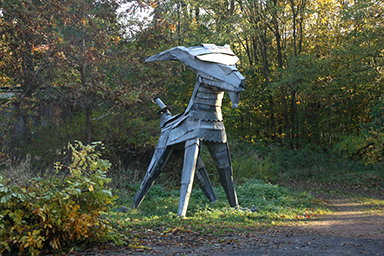
Deanna Pindell focuses on forest and water quality issues through sculpture, installation, and public art. She explores the complexity of these concerns and proposes functional, remediative solutions when possible. As a citizen scientist and community-engaged artist, she has worked with climate scientists, marine biologists, water-quality chemists, soils scientists and a variety of community stakeholders.
|
|||
Lorenz Wiedemann, Munich, Germany My name is Lorenz Wiedemann and I am a digital artist and 3D Designer from Munich Germany. I recently discovered mycelium and have become deeply fascinated by its potential. Together with a friend from the Buinho FabLab in Portugal, and its founder Carlos Alcobia, I am planning a joint venture to explore the possibilities of mycelium-based composites (MBCs).
|
|||
 2022 |
|||
Rooted in a space of paradox, my practice attempts to question the mnemonic capacity of technology as an archival medium, dismantling the notion of the video or sound record as an absolute or concrete preservation of the body/psyche. Creating multi-media, sculptural installations, my work aims to mirror a high-intensity atmosphere in which technological, human, and material bodies compete and grate against one another in a perseverance towards preservation. My practice is further influenced by a critical interest in neutrality, passivity and Quantum Theory’s concept of “potentia,” which is defined as an intermediary layer of reality that exists halfway between the physical reality of matter and the intellectual reality of the image. I consider technology-based archives to occupy this intermediate reality, offering a critical venue through which to examine larger themes, such as gender, sexuality, death and decay. |
|||
 Robin Germany, Lubbock Texas In a new and developing body of work, I am creating photographic collages of mushrooms that propose an imagined web of hyphae or connecting systems below the ground. With this work I am expanding my interest in the hidden linkages and systems within the natural world and the limits of our understanding. It is the revealed and the concealed aspect of nature that particularly holds my attention. This work is in the earliest phase of development and it is the main project I intend to focus on in the foreseeable future. Prior to this exploration, my photographic images framed the water to articulate a similar above/below, seen/unseen relationship. For ten years I made images in bodies of water in Texas, with the camera positioned at the line between the air and water. The water is seen in the context of science, religion and history, delivering limited facts and uncertain truths, at the nexus of a conversation about the transience of knowledge and constancy of change. In both bodies of work, I investigate the cultural understanding of nature, suggest new ways to understand the natural world, and allude to the mystery and power of the natural forces. |
|||
Ryan Parra, Mesa, Arizona Our ancestors' knowledge and value of the environment's flora was vital. Everywhere, they were surrounded by potential balms, poultices, pain relievers, euphoriants, and entheogens, using these systems as tools for the sustenance of their bodies and edification of their spirits. Yet, where these ethnobotanical gardens once grew now stand pharmacies with suspiciously clean white walls and endless supplies of medicine. While advancements in pharmacology are indeed essential, at the same time it's unreasonable to not have a fundamental understanding of the plants from where they derived, along with the wisdom and value of the natural world left behind by our forebears. Further reflecting this interest in the curious intersection of culture and nature, the project title Vivarium (Latin for “place of life”) refers to an enclosed space with plants or animals for observation and research purposes. This subtle act of concealing fragments of the natural world expresses a sense of power one has over something much like science with nature, while also expressing great curiosity and love towards that same thing. From here, visual narratives of curiosity, containment, and control evolve as the conceptual framework that I explore throughout these photographs. |
|||
Hannah Bestly Burt, London, UK Hannah’s practice is grounded in an urgent love for the overlooked natural world, the aesthetics of the imperfect and a belief in a political imperative to encourage joy in the world. A current project is a series of ‘mycelium fragment’ wall-hangings - sculptural wall-based objects composed of woven wool networks of Mycelium-like structures. To express these branching and fusing webs Hannah developed a method of hand-weaving 3D networks using purpose-built frame looms and ‘loose’ random warp combined with double or triple layers of weft. Through this work Hannah wants to elevate fungi - to argue for the uncanny beauty of this overlooked Kingdom. Hannah is fascinated by how mycelium complicates the idea and value of individuality and she is inspired by the hope that fungi have to offer as a remedy to human impact on the environment. |
|||
Alec Chalmers, Leeds, UK I am interested in the intersection of architecture, ecology and sustainability, and worldbuilding. I am interested in many different areas that might intersect with these subjects, such as using different aspects of biology to design new ways of building worlds. I approach my work from the perspective of a Concept Artist with an eye for exciting design, utilising the same skills and production workflows used in production in the game and film industries. |
|||
Josephine Rutherfoord, Bucks UK My name is Josephine Rutherfoord and I am an artist whose curiosity about the world above me, below me and in me has led me to work in the space where art meets science. Collaboration with scientists is a core part of my practice. I use a variety of processes and media – drawing, cyanotypes, 3D printing, video and cast sculptures in latex and wax. I have worked with a range of subjects from IVF and miscarriage to mycelium and fungi.
|
|||
 Ali Matthews, Manchester, UK “I have come to the conclusion that much can be learned about music by devoting oneself to the mushroom.” - JOHN CAGE, 1954 I am an American artist living and working in the UK. I work across performance, music and video and have toured work to theatres, galleries and club spaces across the UK & Europe. The pandemic, in tandem with the climate crisis, has made us awake from our normal Anthropocene coma and come alive to the natural world and its many languages. While plants and animals usually get all the glory, fungi are the neglected third kingdom on earth. They share DNA with us and provide solutions to many 21st century ills - cleaning up oil spills, healing our brains from depression, providing protein alternatives and showing us how forests operate. They turn us on to the cycles of birth and decay occurring under our feet. Indeed, mushrooms mirror Anthropocene ruin back to us – they grow in ‘edge places’ and against all odds. This residency coincides with a period of artistic research leave for me focusing on creating a new show about fungi and interviewing mycologists, and as such it comes at a perfect time. |
|||
Maria L Schechter, Bloomington, Indiana Maria Schechter was born and raised in Pasadena, California. She co-creates with the natural world using living materials, mycelium composites, and plant-based palettes. Her workshops call us to recognize that art and nature are inseparable, intertwined expressions of the beauty and wonder that we call the natural world. She was nominated for a MacArthur Award at the age of 21 for her development of What-is-Art-What-is-Sound, an international arts collective turned non-profit, founded in 13 countries and 28 cities with over 200 artists members. She has exhibited nationally and internationally and has received a variety of grants and awards, including the UCLA Artist Achievement Award and the Center for Cultural Innovation Grant, Los Angeles, CA. And this year she has been awarded A Dehaan Artist of Distinction Award from the DeHaan Foundation and Indiana Arts Council. Her first mycelium project, Gatekeepers, a homage to impermanence grown over a three year period, is now on the grounds at the Arrowmont School of Arts and Crafts in Tennessee, where the five foot arch will eventually decompose back into the earth. She has exhibited with several galleries and museums including Agora Gallery and Whitebox in New York City, The Abrams Claghorn Gallery, Anderson Museum, Minnetrista Museum and Gardens, Triton Museum, and the Seattle Art Museum. She has been published in Eluxe Magazine, The Ecological Citizen, Nature Evolve Magazine, and many others. Maria earned her bachelor of fine art from Cornish College of the Arts in Seattle, WA. She initiated graduate work with New York University and completed a master degree from Schiller International University in Heidelberg, Germany. Maria lives and works in Bloomington, Indiana. |
|||
Val Smets, Brussels, Belgium Val Smets’ practice is positioned between painting, installation, sculpture, and sensory intervention, often combining painting with light installation, site-specific settings, and smell. Her works reflect on the artist’s deep engagement with painting through a multitude of technics, By playing with scale and proportions Smets is repositioning the viewer as the smallest entity |
|||
Mary Hegedus, Toronto, ON I am a doctoral student at York University researching fungi, science, and visual culture. My interests centre around the knowledge we can gain from fungi. What can fungi teach us about film and media? For my master’s thesis at the University of Toronto I explored the parallels of the precarity and resilience of mushrooms and survivors in post-apocalyptic film. Fungi are the focus of my studies as I am interested in the fact that they represent things that exist in complex systems that humans don’t usually see. I am currently working on media representations of fungi and film specifically with respect to timelapse photography, Uexkull’s Umwelt theory and AI GAN modelling. |
|||
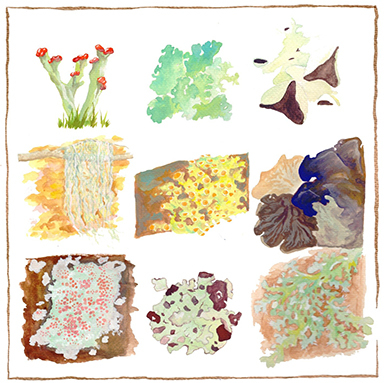
My reading of Merlin Sheldrake’s Entangled LIfe (2021) last summer was the catalyst for my mycophilia. Sheldrake’s chapter on lichens sparked my desire to understand lichens more and think about their significance, and their implications for life on the planet and beyond. I am in awe of their collaboration and convergence, and that they are “a gateway to the idea of symbiosis”. Rather than being in competition and conflict, the fungi and algae (and also innumerable other species) “sing a metabolic “song” that neither can sing in isolation”. Lichens exemplify a strategy of life that achieves fundamental collaboration, a metaphor for doing together what cannot be done in isolation. From my home studio I have started drawing lichens, exploring the steady and slow coverage lichens achieve. My next step is to spend time in Ontario habitats of commonly recognized lichen, being with and observing the lichen. Following this, I will try to convey something about lichen and this experience in my work. My intuition at this point is that very slow movement will be a part of what is to be conveyed, somehow. Given my age and my very slow recovery from Long Covid, such imagery may speak personally to me and provide comfort. |
|||
Katherine Young, Atlanta, Georgia The expressive noises and curious timbres of my electroacoustic music circulate via kinetic structures, as I engage notated compositional, improvisational, electronic, and installation practices. I take a process-oriented approach that prioritizes symbiotic modes of musicmaking and collective listening. Relationship building and collaborative ethics are central to my practice. The human and more-than-human ecologies that initiate, sustain, and produce the work become significant compositional materials and musical considerations. |
|||
 2021 |
|||

Katie St Clair, North Carolina The natural world has always seemed to me extremely complex and impossible to truly comprehend. Lying on the forest floor, even the simplest forms and structures: a leaf, twig or mushroom is ripe with mystery. An alchemy is realized as the living world decays and transforms. The layers of soil below us are in an earthly cosmic dance, one where the whole composition is more important than any one functioning individual aspect. As an artist, I find myself in awe of the endless connections, the symbiotic and beneficial partnerships as well as the parasitic relationships, that are in constant flux. We are one organism in an impossibly complex web of being. My sight specific installations are spheres of made of locally collected refuse and natural pigment and ice. The spheres are hung above a canvas and melt. Eventually the water and pigment settle into large pools on the canvas that evaporate over time, leaving an inky crust of marks that result in a painting. The installation exposes all the different stages of transformation in the painting process that viewers don’t normally see in a gallery. As opposed to my painting practice, the melting of the spheres is a natural act of painting without an artist’s hand. The normality of the roadside has been restructured to direct attention and heighten awareness to what is so commonly overlooked. |
|||
Melanie Fisher, Buffalo, New York My sculptures are organic and otherworldly. With influences from nature and sci-fi, I build large forms that are new hybrids of species, with mixed characteristics from the plant and animal kingdom. By working in a range of scales and mediums, I explore the connections between our micro and macro worlds, imagining the opportunity to discover something previously unknown. |
|||
I and you are in a time where facts and opinions merge into new entities. Amidst a technologically charged present with wishful illusions of objectivity, fake news and deep fakes, I find myself - as many other contemporaries - in a joyfully desperate search for truth. Truth as something that is not known, something that happens rather than something to be found. This inquiry has an iterative nature and through it a growth of multiples takes place. Driven by a passion for the complexities of nature, my work seeks to invite the spectator to wander, discover and wonder. Always and never the same to each other my works are the truth bearers, celebrating minuscule moments of change and paying tribute to chance having a chance. The works are rarely produced, rather growing over time. By doing so a truth continuously evolves. The series of sculptures, prints, photographs, drawings and installations are witnesses to something that has happened, has been. An archive. Archiving is how I view my artistic endeavors, and each reveals one out of an set of multiplicities, a version in its own right. It is my greatest aspiration to engage you in a playful journey, to invite to wander and poke through the archives, to become part of it. I wish for you to take some seeds of my truth in your truth and to leave some of your truth to me in return.
|
|||
I am a visual artist living in Calgary, Alberta. I have a diploma in Environmental Assessment & Restoration from Lethbridge Community College. I love nature. Ever since I was a little girl and my grandmother took me hunting for prairie crocus in the coulees of the Old Man River I have |
|||
Iris Kiewiet, Wakefiled, Qc Iris Kiewiet, Dutch-Canadian artist, moved to Wakefield, Quebec from Rotterdam in 2006. She has exhibited in solo and group exhibitions in Canada and in The Netherlands. |
|||
The imagery and symbols that come through Robyn's work encourage one's gaze inward to the cellular realms. There, one discovers playful depictions of chemical processes; they are the basis for the macrocosm, and our human consciousness becomes an interface between the seen and the unseen worlds. |
|||
Emma Pallay, Montreal |
|||
Inspired by an aesthetic in wich art, science, and nature overlap, her multi-disciplinary practice includes drawing, sculpture, installation, photography, and video. By making use of the tools and technical resources of biological research laboratories and learning centres, she embraces organic matter itself as an artistic material, distilling it into a universe imbued with mystery. Her interest for the underground growth networks of mushrooms as interconnected ecological systems has led her to create works that in some ways question, both scientifically and artistically, the sensitivity of non-human life forms and the resilience of nature. |
|||
2020 |
|||
I am an author-illustrator and comics artist with a background in science communication, literary studies, and beekeeping. My work takes a particular interest in environmental ethics and the underdog. As a PhD candidate at the Centre for Sustainability, Otago University, New Zealand, I currently work on a graphic novel about human relationships with 'unloved' microcommunities of invertebrates, moss, and fungi. This is part of my interdisciplinary research that explores visual narrative as a method for cultivating attentiveness to nonhumans. |
|||
Animals and plants get a lot of love. Fungi? Not so much. But yet mycology seems to be making its way into a larger cultural awareness. Fungi has a liminal quality of being subject, object and material. Fungus has been the subject of study in science and art.
|
|||
Carol Padberg, New York My art is incorporated into my lifeways, my community and my livelihood as an educator. Like nested bowls, this creative practice telescopes in scale, moving from intimate interspecies works, to local projects, to international educational initiatives. The urgency of this time demands new forms of inquiry that synthesize poetry and pragmatism, wonder and action, generosity and courage.
|
|||
Sophie Rogers, London |
|||
Julia Knowlden, Canmore AB I grew up in Canmore exploring the Rocky Mountains and playing in the woods. I worked as a landscaper in Nanaimo while attending University and was able to explore a lot of Vancouver Island. This continued connection to nature has made me a very spiritual person and a passionate environmentalist. Both these aspects of my personality are the main influence in my art.
|
|||
Allison McElroy is a Professor of Art at Jacksonville State University. She received her M.F.A. from Savannah College of Art and Design. During her graduate studies, McElroy traveled to Lacoste, France where she studied on-site installation under Dr. Friedhelm Mennekes; renowned curator, professor and author. McElroy’s artistic interests lie in an exploration of ecosystems, natural processes and materials. Her research focuses on explorations of creating with everyday materials such as dirt and spiderwebs, to push the boundaries of ‘high art’; that which is exhibited in museums. Her artistic techniques include: mixed media, sound recordings, and on site installations using native materials collected from the area. JSU provides McElroy with an outdoor classroom, to teach “Art and Science Observations”, and “Biodesign”, where students focus on merging art and science together in a way to bring awareness to contemporary environmental issues. |
|||
I am currently studying a Masters Degree at Central Saint Martins, where I have just finished my first year. I have been exploring the wonders of nature and how growing cress seeds inside an agar sculpture can distort and reshape the original structure. I am keen to explore nature in more depth as I see my work heading that way in the future, my intention with the work is to engage with a wide audience, provoke thought, provoke emotion and discussion as well as enabling people to think about what is around them and what should be preserved for a better life. |
|||
Katie St Clair, North Carolina The natural world has always seemed to me extremely complex and impossible to truly comprehend. Lying on the forest floor, even the simplest forms and structures: a leaf, twig or mushroom is ripe with mystery. An alchemy is realized as the living world decays and transforms. The layers of soil below us are in an earthly cosmic dance, one where the whole composition is more important than any one functioning individual aspect. As an artist, I find myself in awe of the endless connections, the symbiotic and beneficial partnerships as well as the parasitic relationships, that are in constant flux. We are one organism in an impossibly complex web of being. My sight specific installations are spheres of made of locally collected refuse and natural pigment and ice. The spheres are hung above a canvas and melt. Eventually the water and pigment settle into large pools on the canvas that evaporate over time, leaving an inky crust of marks that result in a painting. The installation exposes all the different stages of transformation in the painting process that viewers don’t normally see in a gallery. As opposed to my painting practice, the melting of the spheres is a natural act of painting without an artist’s hand. The normality of the roadside has been restructured to direct attention and heighten awareness to what is so commonly overlooked.
|
|||
 Alison Neville, Utah Fungi, maps, and political events permeate most of my work. I find them to be bizarre and otherworldly. This being said I cannot understand enough about them. I wonder how they can be combined, what can be learned from them? Are there ways to bring out those things that intrigue me? I examine world events and try to dissect them into understandable pieces. I try to play the scientist. The small and common button mushroom, available at every super-market, becomes the map for a nebula only seen through the eye of the Hubble Space telescope. I use maps to help me interpret political fragments into the cross-stitches that I can carry with me. Adding little indications of this research to make roads and public buildings. Cordyceps spring up in new varieties that choose kitsch statuettes as their hosts.
|
|||
Ellie Duffy, Savannah, GA In the world my sculptures live in, the roles and power of humans are perversed and their energies are used in different ways. A world where we function within the systems and the cycles of the earth, instead of against them. I imagine small humans, making the world around them, creating my sculptures. They source materials where they can, usually from the trash, reusing what others don’t want. They use power tools when they have access, but much of the work is collective, with lots of hand tools. The work is harder this way, but they know more effort now is part of the solution. Their efforts are not misplaced. |
|||
Jennifer Arave, Minneapolis, MN I am discovering that the primary emphasis of my dance/movement career over the past 10-15 years has been grounded in the ability/disability to interface and build connections with others. I have zeroed in on systems and sometimes entities that connect/disconnect and even mislead to create disconnections through confusion -- be it political, or philosophical or interpersonal in nature. Many man-made systems that are meant to connect have ultimately confused, obfuscated and blown-up rather than the well-intended connection as purported. This translate ironically, into a perception of isolation, from others and within the individual. Among the systems, technology has often been the object of disdain and the brunt of the critical humor in my work. I work in dance because of its ability to be a substantial connector including dancers, somatic practitioners, and other living beings; wordless movement that bridges gaps, brings clarity and a sense of completion as verbal language is removed. A somatic practice can detangle snags and confusions and a dependency on a verbal language system. This is also true for the movement education modalities I have chosen to invest my time in. Open Source Forms and Body-Mind Centering have opened deep channels into inter-body communication; wordless pathways that become a bridge not only in human to human interaction, but also perhaps connections in shared consciousnesses, human or other-wise. |
|||
Isabel Winson-Sagan, As a budding mycophile and printmaker, I’ve long had an ambition to incorporate mushrooms into my work. Several spore print experiments have gone rather badly! I would love to learn more about the science of mushrooms, and as someone who studied biology in college, I feel that this program perfectly melds several of my interests and could be very fruitful for my future projects. |
|||
Selinavov Yura, Moscow Studying the aspects of the interaction of man and nature in the current and previous eras paves the way to talk about ecology, decolonization and politics in general. Now my interests turn to working with non-human agents, in particular to the living and especially to mushrooms, as an influential realm, with |
|||
Jody Guralnick, Aspen, Colorado I’ve named this body of work The Fifth Kingdom which is, in taxonomy, the kingdom of Fungi, the kingdom of the great hidden labyrinths of growth and decay that support all life. |
2019 Field expeditions |
|
|
 |
Julie Ryder, Australia I am a visual artist who works across the disciplines of textiles, drawing, digital printing, painting, glass and assemblage. Initially trained in science, I retrained as a textile designer in 1990, and over the past 25 years my arts practice has evolved in response to artistic opportunities and arts residencies, expanding my visual language by working with new media, new challenges and experiences. The materials I work with are an integral part of the message I want to convey, leading to a cross-disciplinary approach in making work for exhibition. I draw inspiration from the history of botany and botanical collectors; gender/social inequity; cross-cultural exchange, objects as receptacles of stories and memory; and the use of natural materials in making art in order to uncover hidden stories that lie between the pages of history. Cryptogams are a major co-collaborator in my work – from imprinting cloths directly with fungi, bacteria and molds in 1995; to working with SEMs of hornwort spores during my 2004 ANAT residency with Dr Christine Cargill, Curator of the Cryptogam Herbarium, Australian National Botanic Gardens. My latest body of work ‘The Hidden Sex’ explores 19th century women seaweed collectors, working across the mediums of textiles, embroidery, cyanotype, glass, seaweed and cuttlefish. |
|
 |
Kathleen Winter, Verdun, Quebec I am currently absorbed in a three year project helping transcribe the previously unpublished journals Dorothy Wordsworth (Sister of the poet William Wordsworth) wrote late in life. (Her early journals written in youth are published and famous.) I am doing this for the Wordsworth Trust in the UK. I am also writing a novel based on my findings, to be published by Knopf in 2021. Dorothy Wordsworth was a botanizer in the 19th century amateur tradition, and she collected many mosses, lichen and other specimens, and used a folding botanical microscope invented by the pre-eminent field guide author of her day (Withering). My own studies include sympathetic amateur observation using a powerful magnifier on long walks. I am particularly interested in lichen, fungi and mushrooms. My mushroom interest extends into making medicinal tinctures using homeopathic and spiritual principles as well as nutritional knowledge. I normally walk along the St. Lawrence near my Verdun home, and in the woods of the Eastern Townships, sketching and studying plant life along with Dorothy's writings. The retreat you are proposing would be a wonderful way for me to learn deep things about the mushrooms, lichen and fungi Dorothy knew and loved. |
|
 |
Suus Agnes Claessen, New Zealand I am an author-illustrator and comics artist with a background in science communication, literary studies, and beekeeping. My work takes a particular |
|
 |
As a printmaker, most of the pieces I make derive from some kind of book structure. The structure of a book is simple and its function is intuitive. While books are generally static objects, they are built to be in motion. The spine of a book demonstrates just the right amount of flexibility to allow access. The book form is a vehicle for information, information that was important enough to mechanize and disseminate. Printmaking for me has always been about a mechanism. |
|